
Brush Cutters and Mulchers in Southern Alberta
Foothills Equipment carries 9 brush cutters and mulchers for skid steers, mini excavators, excavators and backhoes, from TMG Industrial, Weldco-Beales and Steelwrist. We are in Calgary and Lethbridge, serving Southern Alberta, everything south of Red Deer. These are the tools for right of ways, lease access, fence lines, acreages and overgrown lots, and most of that work happens in winter here, because frozen ground is what carries the machine.
Every tool on this page is a high flow hydraulic attachment, and two of them require a case drain line. Read the flow section before ordering. Running one of these without the right flow and the right return line is how a motor gets destroyed in an afternoon.
9 brush cutters and mulchers across three lines.
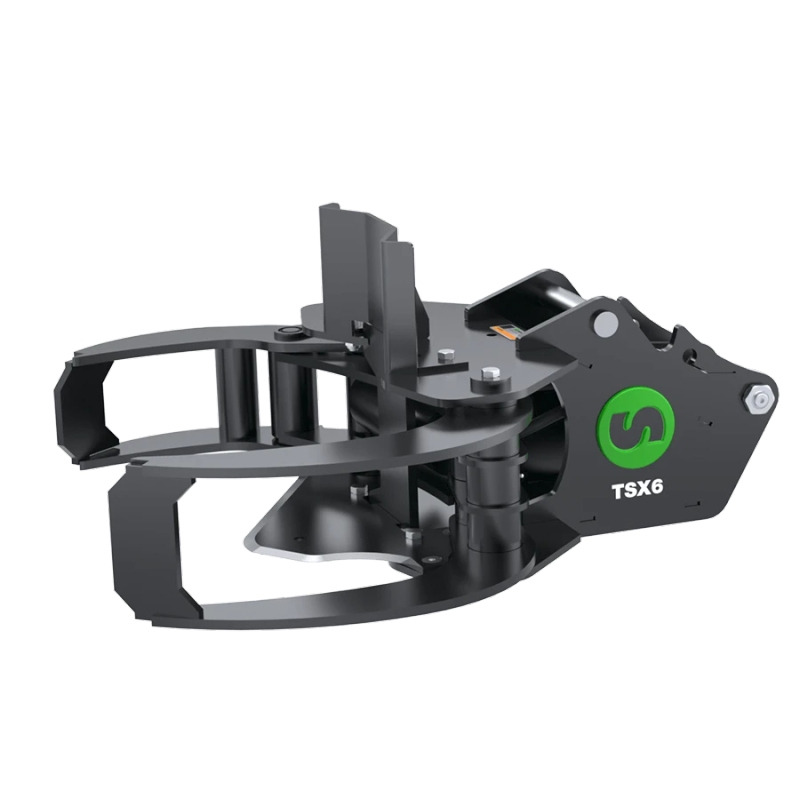
Tree Shears
Talk to an Advisor →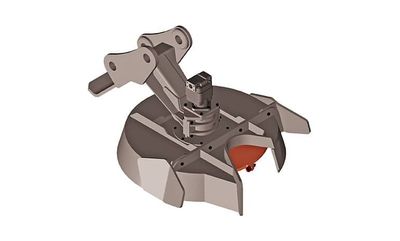
Excavator Rotary Brush Cutter (ERC)
Talk to an Advisor →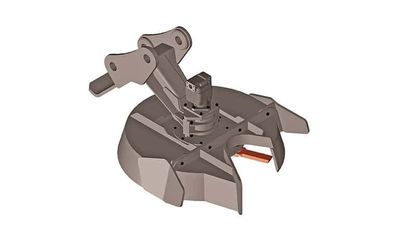
Excavator Rotary Flail (ERF)
Talk to an Advisor →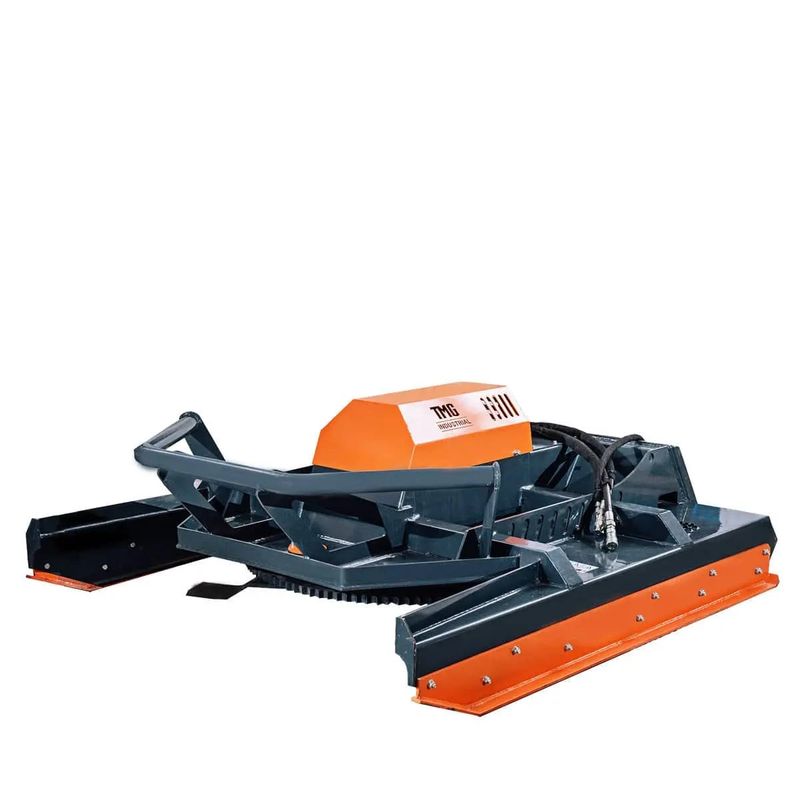
TMG Heavy Series Skid Steer Brush Cutter
Talk to an Advisor →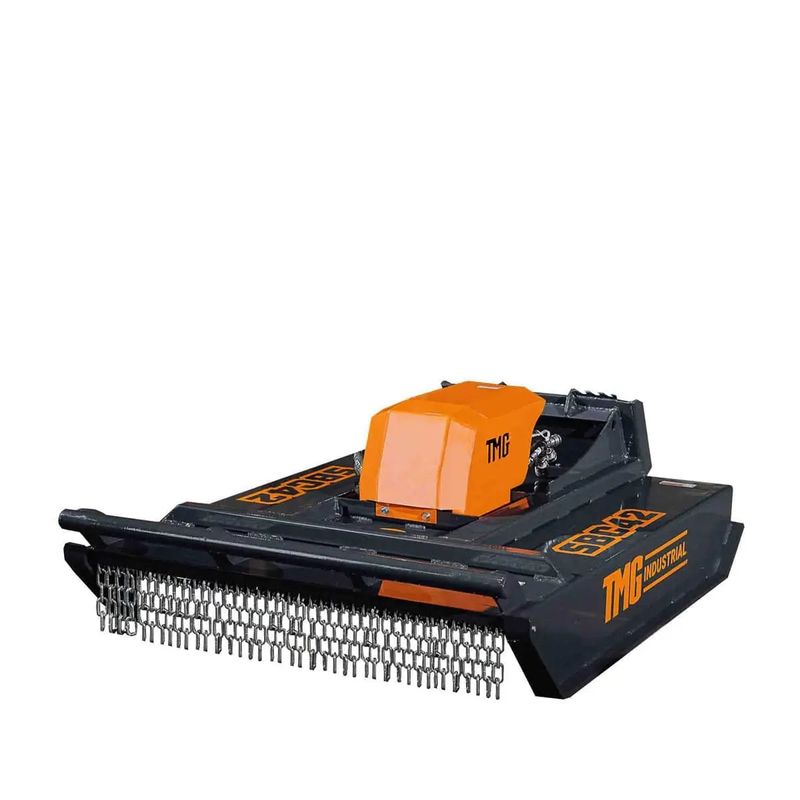
TMG Mini Skid Steer Brush Cutter
Talk to an Advisor →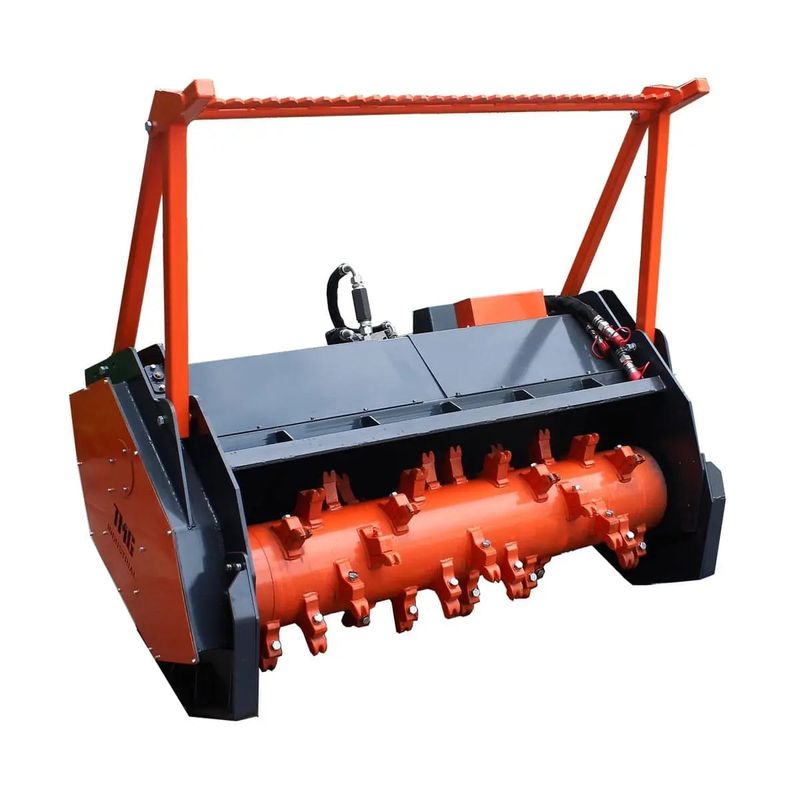
TMG Skid Steer Forestry Drum Mulcher
Talk to an Advisor →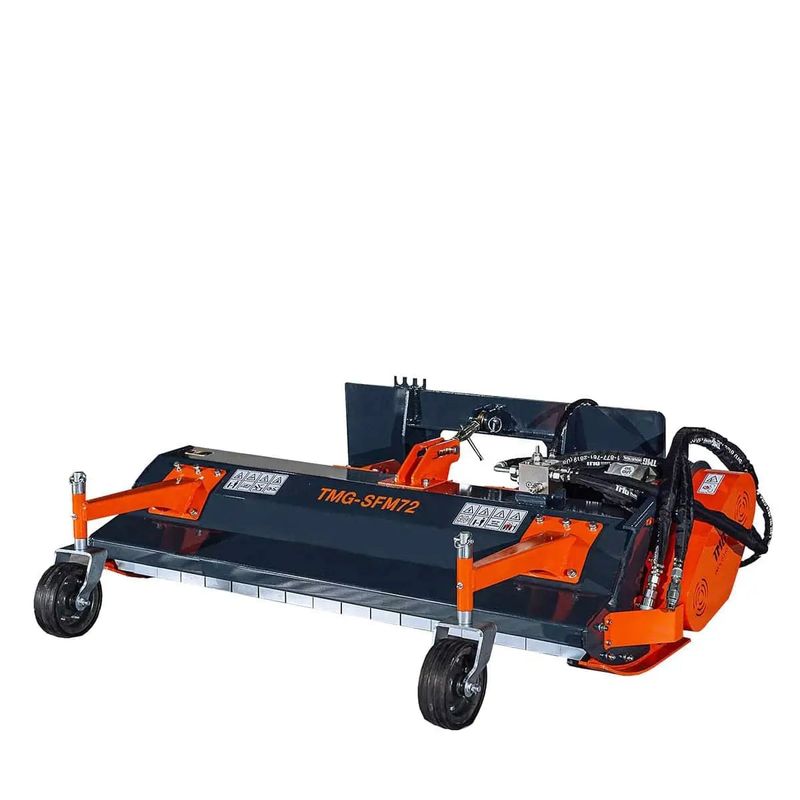
TMG Skid Steer Flail Mower
Talk to an Advisor →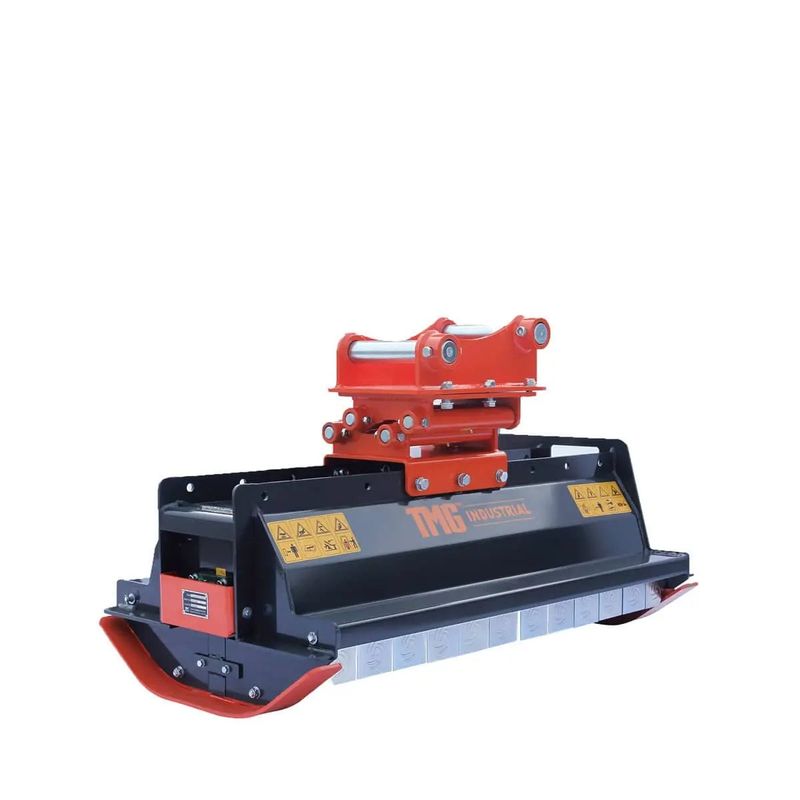
TMG Excavator Flail Mower
Talk to an Advisor →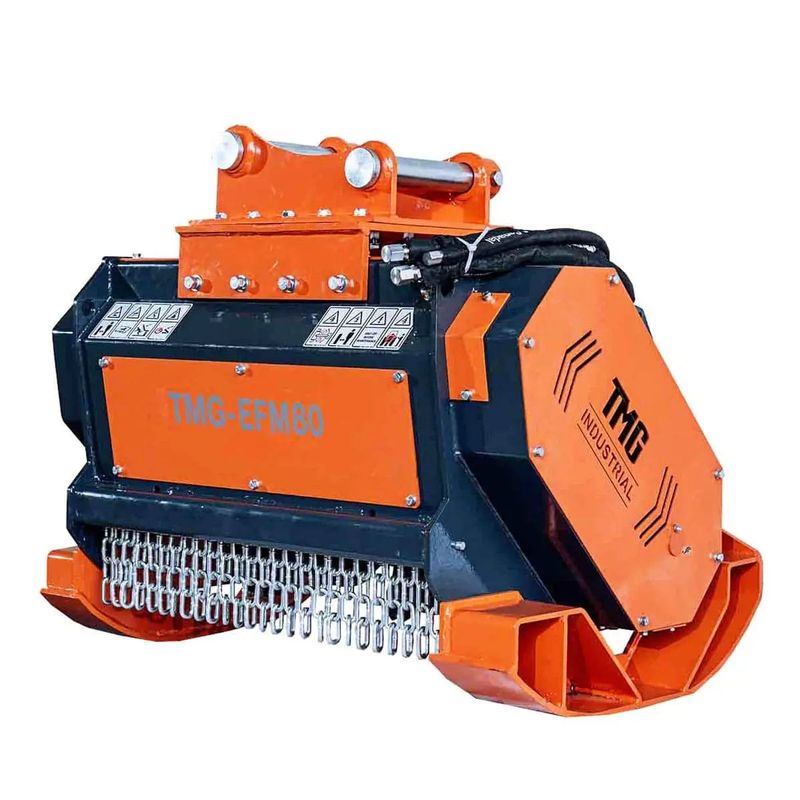
TMG Excavator Forestry Mulcher
Talk to an Advisor →
No brush cutters and mulchers match those filters.
Clear a filter to see the rest, or tell an advisor what machine you run and we will find the right one.
What is left on the ground is the difference.
Rotary brush cutters
An open front deck with heavy swinging or drop down blades, built to push brush over and cut it low. It leaves cut material lying on the ground. This is the fastest and cheapest way to knock down brush and saplings, and it is what most acreage and right of way work actually needs. The skid steer models we carry take stems up to 8 inches.
Forestry drum mulchers
A toothed drum spinning against a fixed bar that grinds standing material into chip on the spot. Nothing is left to pile, haul or burn, and the chip stays as ground cover. The skid steer drum mulcher can cut 4 inches into the ground, which takes the stump with it. It costs more, it needs a bigger machine, and on a site where debris cannot be left it is the only real answer.
Flail mowers
A drum of hammers in an enclosed housing. It cuts finer than a rotary cutter and it throws far less, which is what you want beside a road, a fence, a parked car or a house. Grass, weeds and light brush rather than saplings.
Excavator mulchers and flail heads
The same jobs on the end of a boom, so the machine can reach over a bank, across a ditch or into a slope it could never drive on. This is the half of the category most people forget exists, and on a right of way it is often the practical one.
Tree shears
A hydraulic shear that cuts the stem cleanly and holds it, for when material is being removed whole rather than ground up.
Flow first, then everything else.
Standard flow and high flow are different machines
Every tool here publishes a flow range, and the range is not a suggestion. Run a tool below its range and it is slow and it stalls in the cut. Run it above and you overheat it. To give real numbers from what we carry: the mini loader brush cutter wants 6 to 12 GPM, the flail mower 18 to 23 GPM, the 60 inch heavy brush cutter 15 to 25 GPM, the 72 inch 27 to 35 GPM, and the forestry drum mulcher 24 to 32 GPM on a machine of 75 HP or more. Those are four different machines.
Case drain
Some of these motors need a third line back to tank, separate from the supply and return, to bleed off the pressure that builds inside the motor case. The excavator flail mower requires a case drain line, and so do both stump grinders on the specialty page. The manufacturer own warning is that running without one will blow a seal or damage the hydraulic line. If your machine does not have a case drain port, that gets sorted before the attachment is ordered, not after.
Machine weight and horsepower
A mulcher is heavy and it hangs out front, and on a boom it is out at the end of the reach. The published carrier range covers stability as well as power.
Mount
Skid steer tools run a universal skid steer quick attach. Mini loader tools use their own smaller mount patterns, so tell us which mini machine you run. Excavator heads mount pin on or on a coupler, sized to the carrier tonnage.
Cooling
The drum mulcher carries its own cooling system with a radiator, which tells you how hard these tools work the oil. On a long day, oil temperature is the thing that ends the shift.
AMI, Weldco-Beales and FMS build almost no powered rotating tools. They are fabricators. On this page that means the choice is narrower than it is in buckets or grapples, and an advisor will be straight with you about which line the tool is coming from.
Questions we get asked
What is the difference between a brush cutter and a mulcher?
A brush cutter cuts material down and leaves it lying on the ground. A mulcher grinds it into chip where it stands, so nothing is left to pile or haul. A cutter is faster and cheaper and it is what most clearing work needs. A mulcher is what you want when the debris cannot stay, when the site has to look finished, or when you want the stump gone too.
How much hydraulic flow do I need for a brush cutter?
It depends on the size. The mini loader cutter runs on 6 to 12 GPM, a 60 inch cutter on 15 to 25 GPM, a 72 inch on 27 to 35 GPM and a forestry drum mulcher on 24 to 32 GPM with a 75 HP or larger machine. Tell us your machine flow rating and we will tell you which tools it can turn, before you order rather than after.
What is a case drain line and do I need one?
It is a third hydraulic line that returns oil from inside the motor case straight back to tank, so pressure does not build up behind the motor seal. Some of these attachments require one, including the excavator flail mower. The manufacturer warning is plain: run it without one and you will blow a seal. If your machine does not have a case drain port, get that sorted before the attachment arrives.
Can I put a mulcher on an excavator?
Yes, and for a lot of clearing work it is the better machine, because the boom reaches over banks, ditches and fences the machine cannot drive across. We carry an excavator forestry mulcher for 6 to 10 tonne machines and boom mounted rotary cutters and flails for full size excavators.
Is brush clearing a winter job in Alberta?
Often, yes. Frozen ground carries the machine where soft ground will not, so lease access, right of way and clearing work runs right through the winter here. It is worth planning the attachment purchase into the fall rather than the spring.
Send us your machine flow rating.
That one number decides which of these you can run. Tell an advisor the machine, the flow and what you are clearing, and we will match it and tell you plainly if the machine needs work first.